
1. Palawan Butterfly Ecological Garden and Tribal Village
2. Iwahig Penal Colony and Farm
3. Crocodile Farm & Nature Park
4. Mitra's Ranch
5. Baker's Hill
6. Immaculate Concepcion Cathedral
7. Plaza Cuartel
8. The Baywalk
Our first stop was the Palawan Butterfly Ecological Garden and Tribal Village. We paid 30 pesos per person for the entrance fees. We weren't really excited at first as we thought that this will be just another butterfly sanctuary similar to those present in other places. But boy, were we wrong!


This is the Palawan Bearcat According to the Palawan Council for Sustainable Development, the Palawan bearcat is also known as the Malay civet cat. It derive its
name from the tiny sac or gland near its tail that contains civet, a
valuable odorous substance used as a base for the world's most expensive
perfumes. It is a nocturnal animal with a long husky tail, tufted ears, small
eyes, naked soles and palms, a small pointed face and elongated body.
It is grayish in color and feeds on fruits and meat. Its habitat is in the deep forest, but it also ventures to more open locations, especially when looking for food. A curious combination of stealth and charm with its deceivingly cuddly appearance, natives warn that it is quite vicious when cornered.
It is grayish in color and feeds on fruits and meat. Its habitat is in the deep forest, but it also ventures to more open locations, especially when looking for food. A curious combination of stealth and charm with its deceivingly cuddly appearance, natives warn that it is quite vicious when cornered.


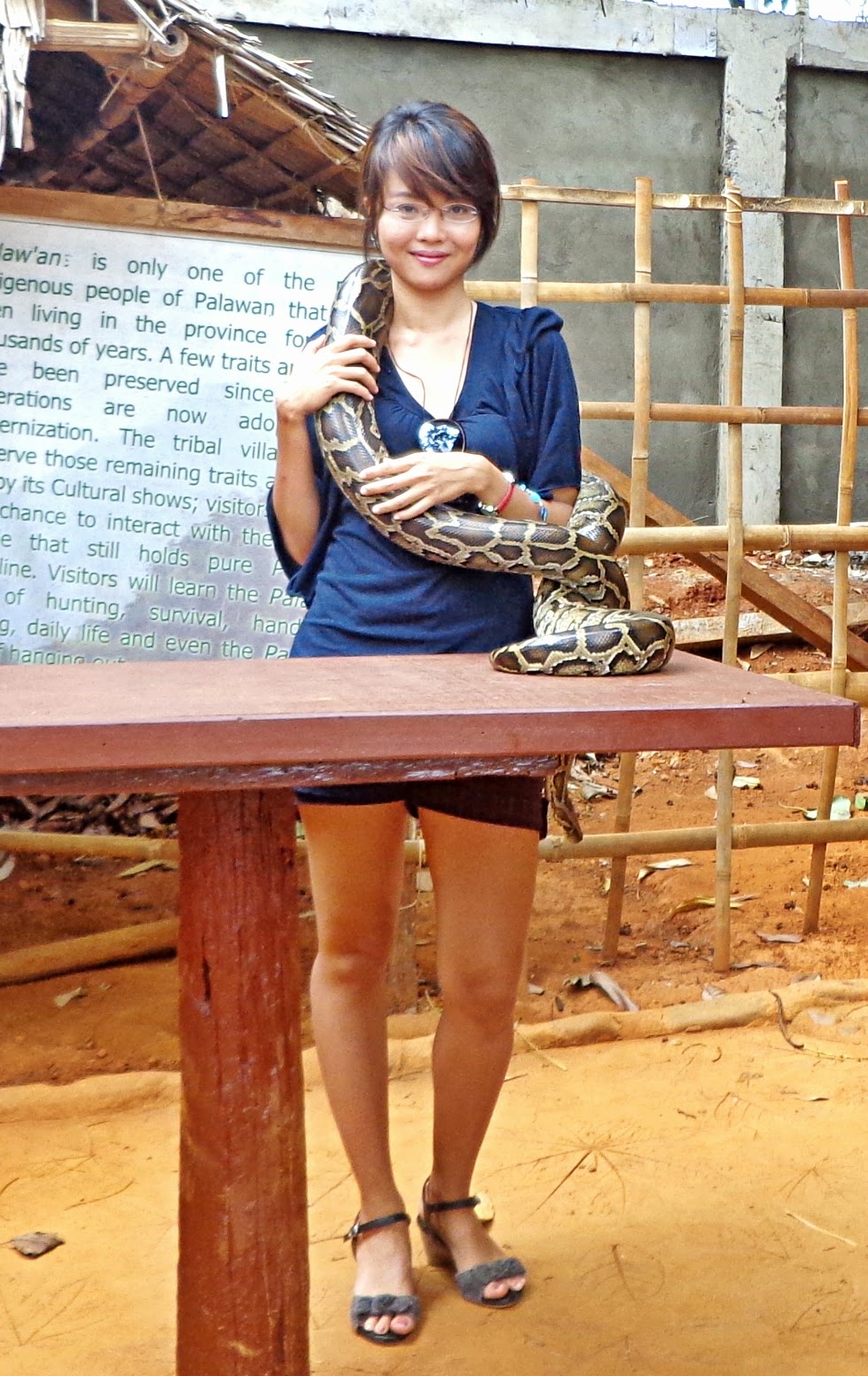
"Palaw'an is one of the many indigenous people of Palawan that have been living in the province for thousand of years. A few traits and trades have been preserved since younger generations are nw adopting to modernization. the Tribal Village is to preserve hose remaining traits and trades and by its Cultural shows.
Visitors will get a rare chance to interact with these native people that still holds pure Palaw'an bloodline. Visitors will learn the Palaw'an way of hunting survival, handicraft making, daily life and even the Palaw'an way of hanging out."

 |
| Here are some of the tools of the Palaw'an |
 |
| Samples of their musical instruments and weapons |


After the lesson, one of the natives went to this "cottage" and played with a musical instrument. The guide told us that each tribal family stays in the village for 2 weeks, then another family takes their place. Donations are greatly appreciated since this will be for the benefit of tribal family who depends primarily on hunting and a little farming for their sustenance.


 Posts
Posts


